What’s New?
US Increases Efforts on Tackling International Wildlife Trafficking
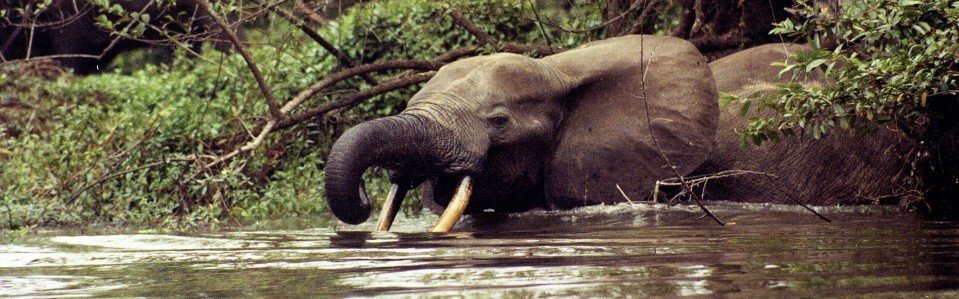
February 2014 saw an increasing number of countries announcing efforts to tackle wildlife trafficking and the ivory trade in particular. As a former WWF employee and US Peace Corps Volunteer, I’m thrilled that the United States has upped its strategy to help lead the way in these efforts. From destroying its ivory stockpiles (along with other countries who followed African leaders like Kenya and Gabon – see my earlier post from November 2013), to announcing a new National Strategy for Combating Wildlife Trafficking, enforcement aspects of conservation are taking an increasingly important and visible role. African elephants, both Loxodonta africana and Loxodonta cyclotis have been a major focus of these efforts, but other endangered species, such as the rhino and narwhal, are also seeing the benefits of increased enforcement, prosecution, and penalties here and abroad. These efforts, thankfully, are also enjoying bipartisan support in the US Congress, with lawmakers from both parties offering support, including potentially “beef[ing] up penalties for smugglers” through the House Foreign Affairs Committee (Emily Yehle, Lawmakers want to aid U.S. effort to combat wildlife trafficking, E&E News, February 27, 2014).
Kindle Countdown Deal starts January 1, 2014!
Starting on January 1, 2014, the Kindle version of Glimpses through the Forest will go on a countdown sale starting at $4.99, moving back up to its regular price by January 7, 2014. Hurry and get your discounted copy starting January 1!
Remote Sensing Image Captures Forest Biomass and Forest Elephant in Lope National Park, Gabon!
I saw a story today that I had to share… Conservation, often thought of as a field-work only endeavor, truly benefits from well-designed and creatively-implemented technological advances! From the world of biomass mapping and remote sensing developed to help implement programs to Reduce Emissions from Deforestation and forest Degradation, with the goal of inventorying, monitoring, measuring, reporting, and verifying carbon stocks, comes a great wildlife-related image developed in Lope National Park, Gabon. To my knowledge, this is the first 3D LiDAR image of a forest elephant in Gabon (at least the first I’ve seen!). These remote sensing technologies are proving ever more important to landscape-scale conservation. WWF has started using drone technology to combat illegal wildlife poaching and trafficking. And mapping tools from GIS to laser to CLASlite continue to advance and improve conservation, climate, and sustainable development efforts. Glimpses through the Forest relays some of my personal forest elephant encounters, and these new tools promise to help ensure communities and conservationists can work together to help protect elephant and other wildlife habitat.
Q&A with Great Falls READers Book Club
Had fun tonight discussing Glimpses through the Forest by Skype video with the Great Falls READers book club – a group of lovely women (including my mother!) who chose Glimpses for their December read. Thanks so much!!!!
U.S. Ivory crush helps signal strong stance on elephant conservation
U.S. Ivory crush helps signal strong stance on elephant conservation
Last week, the US Fish & Wildlife Service (US FWS) made a big statement for the conservation of elephants – it destroyed six tons of confiscated ivory – nearly the entirety of the US’ ivory stockpile – in what has been called a global call to action. This type of statement, which is more than symbolic, as it represents millions of dollars-worth of ivory, follows similar courageous acts in other countries. In 2011, Kenya’s President Daniel arap Moi destroyed twelve tons of tusks, worth an estimated $3 million. The next year, Gabon’s President Ali Ben Bongo burned his country’s entire stockpile of confiscated ivory that is thought to have come from around 850 elephants.
In addition to the vitally important role these acts play for increased awareness, deterrence, and elephant conservation, the US FWS’ ivory crush has a personal importance to me. My friends and former colleagues in Gabon and other parts of Central Africa are taking an on-the-ground leadership role in protecting forest elephants by engaging with local communities, stepping up enforcement efforts, and expanding their conservation activities into the courts. The Last Great Ape Organization, or LAGA, really started the trend of enforcing wildlife laws in Central Africa. Its founder, Ofir Drori, has worked tirelessly with his teams in Cameroon and an expanding radius of jurisdictions, to bring poachers and other illegal wildlife traffickers to justice. (See my review of Ofir’s book, The Last Great Ape: A Journey Through Africa and a Fight for the Heart of the Continent.) These efforts are increasingly important as illegal wildlife trade, according to Bas Huijbregts, my friend and now head of WWF’s campaign against illegal wildlife trade in Central Africa, is valued at over $8 billion worldwide.
Tools such as quick DNA analysis have been perfected by groups such as the University of Washington’s Center for Conservation Biology to help law enforcement and scientists determine where ivory confiscated in Asia, Europe, and the Americas came from; this analysis can point back to specific family groups in Africa. This work has vastly improved the ability of Interpol, governments, and non-profit groups such as WWF to up the ante as they tackle what has increasingly become a highly organized, international criminal activity that helps finance wars and terrorist activities in Africa.
The forest elephants of Gabon are part of what makes that country what it is, an amazing, rich, beautiful place. Tackling the illegal ivory trade at the demand and supply side is necessary, and I’m encouraged by the US FWS’ most recent foray into the battle against wildlife trafficking.
Fantastic review from San Francisco Book Review
I’m thrilled to announce that Glimpses through the Forest received a 5 star review from the San Francisco Book Review! You can see the whole review at: http://citybookreview.com/glimpses-through-the-forest-memories-of-gabon/. I’m honored that SFBR enjoyed the book, and beyond content that they found it “completely transporting,” “rare,” “beautiful, rich, and alive.”
5 Star Review from Portland Book Review!
I’m thrilled that Glimpses through the Forest received 5 stars from Portland Book Review today! http://portlandbookreview.com/glimpses-through-the-forest-memories-of-gabon/
Africa Book Club’s Author of the Week!
This has been a great week! First, my hometown paper included a review of Glimpses through the Forest, and now, the Africa Book Club has listed me as their Author of the Week! https://www.africabookclub.com/?p=14485
Thank you!!
Review in Great Falls Tribune
It’s an honor to have my hometown newspaper include a review of Glimpses through the Forest online and in the Sunday printed edition of the paper! Check it out online at:http://www.greatfallstribune.com/article/20130922/LIFESTYLE01/309220008/From-Great-Falls-Gabon-Peace-Corps-story
 Writings By Jason Gray